
Saltmarshes at a Tipping Point: New Global Report Warns of Widespread Loss and Calls for Urgent Coastal Action
By Blue Economy Insights
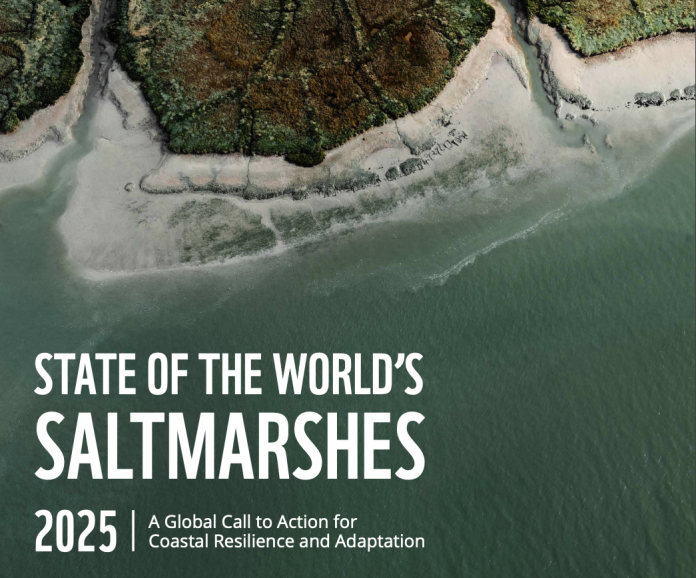
A landmark new report launched at the 3rd United Nations Ocean Conference reveals the precarious state of one of Earth’s most crucial yet overlooked ecosystems, saltmarshes. Titled State of the World’s Saltmarshes 2025, the report is a sweeping international assessment produced by WWF, Blue Marine Foundation, UK Centre for Ecology & Hydrology, and dozens of leading researchers across more than 30 countries.
Despite covering less than 0.04% of Earth’s surface, saltmarshes deliver an outsized punch in the global fight against climate change and biodiversity loss. Yet, nearly half of their historical area has already been lost and they continue to disappear faster than tropical forests.
Vital, Vulnerable, and Vanishing
Saltmarshes, tidal wetlands found where land meets sea, store over 1.44 gigatonnes of carbon, buffer coastal communities from storms, and act as nurseries for key fish and bird species. Still, they face threats from land reclamation, sea-level rise, invasive species, and political neglect.
According to the report, saltmarshes are disappearing at a rate of 0.28% per year. Between 2000 and 2019 alone, the world lost 1,453 km², twice the size of Singapore. That destruction released 326 million tonnes of CO₂-equivalent into the atmosphere.
- “Letting saltmarshes vanish is like letting your insurance policy lapse during storm season,” the report warns.
The Hidden Power of Saltmarshes
The report underscores saltmarshes’ powerful role in:
- Climate mitigation: Their “blue carbon” capacity stores carbon more efficiently per hectare than most forests.
- Disaster protection: Saltmarshes can reduce wave heights by 40% and lower flood damage by up to 47%.
- Biodiversity support: They are home to migratory birds, rare fish, and culturally significant flora like South Africa’s Juncus kraussii.
- Economic value: Providing ecosystem services worth an estimated $8.7 trillion annually—including fisheries, flood protection, and water filtration.
Despite these benefits, funding for saltmarsh restoration lags far behind better-known ecosystems like mangroves.
A Saltmarsh Breakthrough on the Horizon
The report proposes a global “Saltmarsh Breakthrough” to scale conservation, guided by frameworks like the Paris Agreement and the Kunming-Montreal Global Biodiversity Framework. It calls for:
- Restoration of up to 2 million hectares.
- Integration of saltmarshes into national climate and biodiversity strategies.
- Sustainable financing via blue carbon markets, biodiversity credits, and insurance-linked models.
With 45% of remaining saltmarshes already within protected areas, the foundation is there—but the quality and enforcement of protection remains uneven.
Restoration in Action
Innovative projects from Maryland’s Blackwater Refuge in the U.S. to the Solent Seascape Project in the UK demonstrate how reusing dredged sediments can successfully raise marsh elevations and reintroduce native plants. Meanwhile, cities like Townsville in Australia are embracing saltmarsh restoration as part of urban climate resilience planning.
The Path Forward
The authors emphasize that 2025–2030 is a defining window to reverse saltmarsh decline. Global collaboration, financing, and political will are essential.
“Saltmarshes are not just coastal habitats. They are frontline climate solutions,” said Razan Al Mubarak, IUCN President and contributor to the report. “Protecting them is not just an environmental priority—it’s a moral and practical imperative.”
As the world approaches COP30 in Brazil, the report urges governments and non-state actors to give saltmarshes a seat at the climate and biodiversity decision-making table.
Read the full report : https://www.bluemarinefoundation.com/wp-content/uploads/2025/06/State-of-the-worlds-saltmarshes-2025.pdf