
Flonduran Breakthrough: A Genetic Leap for Coral Reef Survival
By Blue Economy Insights
In a world-first for coral restoration, scientists have successfully bred and outplanted a new generation of elkhorn corals onto reefs off the coast of Miami. These corals, known as “Flondurans,” were created by crossbreeding elkhorn colonies from Florida with genetically resilient colonies from the warm, turbid waters of Tela Bay, Honduras.
Led by the University of Miami’s Rosenstiel School of Marine, Atmospheric, and Earth Science, in collaboration with Tela Marine and The Florida Aquarium, this breakthrough could reshape the future of coral conservation throughout the Caribbean.
“Elkhorn coral is one of the most important reef-builders in the Caribbean but it is critically endangered,” said Dr. Andrew Baker, Professor of Marine Biology and Director of the Coral Reef Futures Lab at the Rosenstiel School. “By expanding its genetic diversity and resilience, we are giving this species a fighting chance.”
A Critical Crisis for Coral Reefs
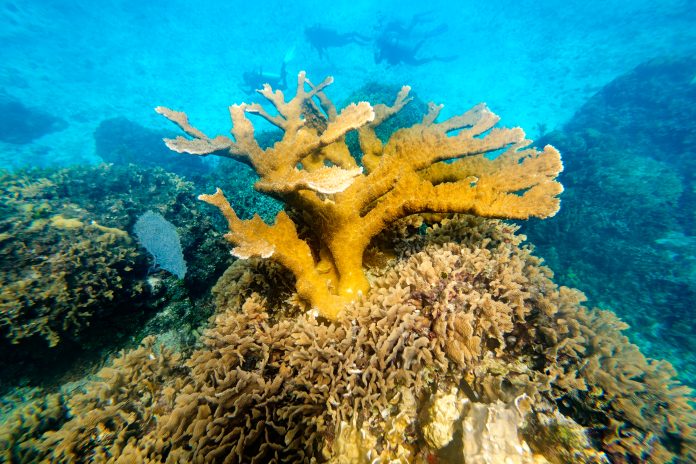
Elkhorn coral (Acropora palmata) has declined by more than 99 percent since the 1980s due to disease, warming seas, and pollution. Known for its large, branching structure, elkhorn coral provides essential habitat for marine life and helps protect coastal communities by acting as a natural barrier against storms.
In June 2024, Baker’s team traveled to Honduras to collect genetic samples and 13 spawning-sized coral fragments from Tela Bay, one of the few reef ecosystems thriving in conditions that usually cause coral collapse. Despite facing high temperatures, low visibility, and agricultural runoff, Tela Bay’s corals continue to flourish.
A Groundbreaking Scientific Milestone
After transporting the corals to Miami, seven of the fragments were transferred to The Florida Aquarium’s Coral Conservation and Research Center. This facility, located in Apollo Beach, is the first in the world to induce elkhorn coral spawning in a laboratory setting.
In July 2024, both the Florida and Honduran corals spawned on the same nights, allowing researchers to produce over 200 Flonduran coral larvae. The coral babies were raised under careful observation for nearly a year.
“We are thrilled to report that the first 35 Flonduran babies, along with 35 Florida elkhorn coral babies, have now been outplanted onto reefs near Miami,” said Keri O’Neil, Senior Scientist and Director of the Coral Conservation Program at The Florida Aquarium. “This is a major step forward in building reefs that can withstand the challenges of a warming ocean.”
International Collaboration with Local Impact
The project received support from the Florida Fish and Wildlife Conservation Commission (FWC) and NOAA’s Coral Reef Conservation Program, both of which recognize the benefits of carefully mixing coral genetics from different regions to boost resilience.
“This is similar to the successful recovery strategy used for the Florida panther,” said Mike Tringali, FWC Senior Research Scientist. “By combining Florida’s legacy coral colonies with genetically strong corals from the western Caribbean, we greatly improve the species’ odds of long-term survival.”
“NOAA is proud to support this effort,” said Jennifer Koss, Director of NOAA’s Coral Reef Conservation Program. “This project puts scientific innovation into action quickly and effectively, helping to safeguard Florida’s reefs.”
Looking Ahead
The parent corals used in this project remain healthy and are expected to produce additional offspring in future spawning seasons. These Flonduran corals could one day seed restoration efforts across the entire Caribbean region.
“Corals do not recognize borders,” said Dr. Baker. “This collaboration strengthens the entire Caribbean reef system by helping critical species recover together.”
Antal Borcsok, CEO and Co-Founder of Tela Marine, added:
“Tela Bay’s coral resilience gives hope beyond our shores. By sharing it, we support coral health throughout the region.”
This historic milestone highlights the importance of international partnerships, marine science innovation, and targeted investment in nature-based solutions. As oceans continue to warm, the success of the Flonduran coral project offers a model for how collaboration and research can help protect one of the world’s most vulnerable ecosystems.