
The Silent Revolution: Maine’s Oyster Farms Go Electric
By Blue Economy Insights
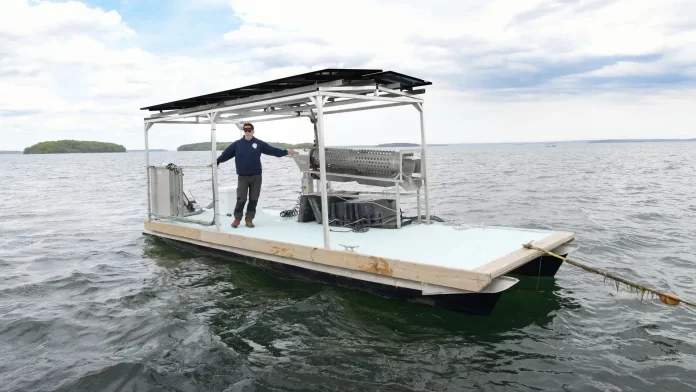
At first glance, it looks like a regular pontoon boat in Casco Bay. But take a closer look and you’ll find something new: a fully electric oyster-processing barge powered by solar panels and batteries, with no gas required.
This barge, built by a Maine company called Shred Electric, uses solar energy to run oyster-farming equipment like tumblers and water pumps. It also has an electric motor for moving around the farm. It is part of a growing effort to run aquaculture operations without fossil fuels.
Shred Electric is also building electric workboats and solar-powered refrigeration systems. These tools help farmers harvest, cool, and deliver oysters using clean energy, from the water all the way to the restaurant.
Why This Matters
Shellfish farming is a growing industry in Maine, with over 200 farms and 700 full-time workers. These farms are typically close to shore, which makes them good candidates for electric boats and solar-powered equipment.
Switching to electric systems can help farms:
- Lower their fuel costs
- Cut down on pollution and emissions
- Reduce noise for both workers and nearby residents
- Avoid the hassle of maintaining gas-powered machines near saltwater
Small Farms Are Leading the Way
Nauti Sisters Sea Farm is a small oyster farm run by three sisters near Yarmouth. They are one of the first to try out these new electric tools. Recently, they replaced their noisy, gas-powered docks with a solar barge that can run all their equipment.
Although the new system costs around $50,000, which is more than most small farms can afford on their own, Nauti Sisters received grants to help pay for it. Their farm shows how small operators can work with technology companies to adopt clean energy solutions.
“We want to be good stewards of the environment,” says founder Alicia Gaiero. “Electrification helps us do that.”
The Charging Problem
One of the biggest challenges is charging the batteries. Nauti Sisters does not have access to electricity at their dock. Charging an electric boat would mean making a long trip up the river or to another island, which adds time and effort.
To solve this, Maine Ocean Farms, a larger oyster farm near Freeport, is working on a $1 million project to install marine charging stations in Portland and Yarmouth. They are also building a powerful electric boat and a solar-and-wind-powered barge for growing oyster seed.
Farm Director Willy Leathers says the goal is to deliver oysters directly by boat to Portland restaurants, which avoids the need for trucking and reduces emissions even further.
“If we can reduce noise and fumes, it makes things better for everyone on the water,” he says.
Looking Ahead
Electrifying aquaculture in Maine is possible, but it requires funding, good design, and more charging access. So far, support from the USDA, the Department of Energy, and nonprofit groups has helped these early projects get off the ground.
However, federal clean energy funding is becoming less certain, and that could slow the transition.
Still, Maine’s oyster farmers and clean tech pioneers are showing that a quieter, cleaner, and more sustainable working waterfront is within reach.