
Singapore Launches First Seagrass Restoration Project to Rebuild Coastal Ecosystems
Blue Economy Insights · June 2025
Singapore has launched its first national seagrass restoration project, a significant step toward rebuilding marine ecosystems and deepening scientific understanding of tropical seagrass. Backed by nearly $1 million in funding from OCBC Bank, the initiative focuses on advancing research into seagrass reproduction while developing methods to restore degraded habitats across the island’s coastlines.
Seagrass: A Small Plant with a Big Role
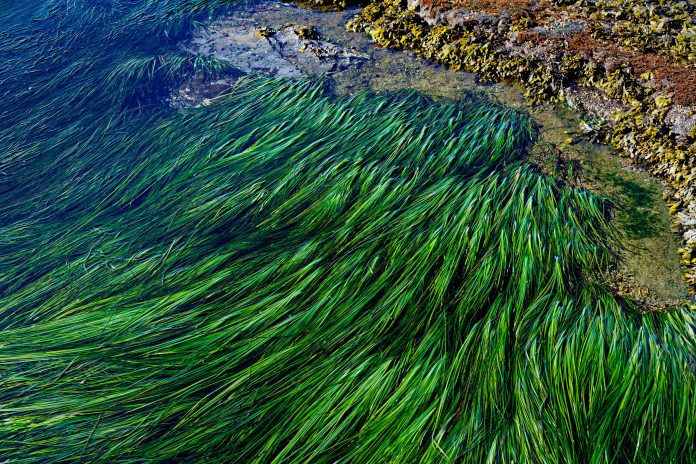
Seagrass meadows are among the ocean’s most important ecosystems. Despite covering just 0.1 percent of the seafloor, they serve as nurseries for fish, offer food and shelter for marine creatures, stabilize sediments to reduce erosion, and act as highly efficient carbon sinks.
“These plants punch above their weight,” said Dr Ow Yan Xiang, senior research fellow at the National University of Singapore’s Tropical Marine Science Institute. “They provide a wide range of ecosystem functions far greater than the space they occupy.”
Beneath the surface, seagrasses help hold coastal soils together with their roots and rhizomes. Above ground, they capture and store carbon dioxide from the atmosphere, offering natural climate mitigation benefits.
From Research to Restoration
The project is led jointly by Dr Ow and Dr Samantha Lai, deputy director of the National Parks Board’s National Biodiversity Centre. Their teams are working to close the knowledge gap surrounding tropical seagrass biology, especially their reproductive patterns, while also developing effective transplantation techniques.
Temperate seagrasses follow more predictable seasonal flowering cycles. In contrast, tropical species are far less understood. Although Southeast Asia is home to 21 of the world’s 72 known seagrass species, only two of the 12 found in Singapore have well-documented reproductive behavior.
“With seagrass beds disappearing at about 5 percent each year in Southeast Asia, conservation alone is not enough,” Dr Ow said. “We need proactive restoration to recover what has already been lost.”
A Hands-On Mission
On May 29, the project team began transplanting seagrass from a dense meadow in East Coast Park to the Sisters’ Islands, where meadows are sparse. Armed with headlamps and water shoes, the group worked before sunrise, using early morning low tides to access the shoreline.
Dr Lai’s team is responsible for determining the best donor and recipient site pairings. They analyze water and sediment quality, tidal patterns, and other environmental factors to increase the chances of transplant success.
“We want to minimize the shock to the plants,” Dr Lai explained. “The more similar the two sites are, the higher the survival rate of the transplanted seagrass.”
Monitoring efforts include measuring seagrass blade lengths and using pulse-amplitude modulated fluorometers to track photosynthesis rates. Despite their precautions, the team has encountered setbacks. Some plots were nearly stripped of leaves within two weeks, possibly due to natural disturbances like crabs or wave action.
Still, early signs offer some hope. “The rhizomes looked healthy even if the leaves were gone,” said research assistant Goh May Ching. “That means the seagrass could grow back.”
A Public Role in Restoration
The project also benefits from community involvement through Team Seagrass, a citizen science program started in 2007. Volunteers help monitor major seagrass sites including Chek Jawa, Pulau Semakau, and Cyrene Reef, and are now supporting restoration efforts as well.
“These public excursions are consistently full,” said Dr Lai. “People are curious and passionate about their coastal environment.”
That curiosity has impact beyond education. According to Dr Ow, public engagement sends a message to decision-makers that natural coastal ecosystems matter to everyday Singaporeans.
“Growing up in an urban society, many people have no exposure to our coastlines,” she said. “But when people see and care, it encourages policymakers to act.”
Looking Forward: Building with Nature
The restoration project is particularly timely as Singapore plans further coastal development, including the upcoming Long Island reclamation. Past experiences offer optimism. The current seagrass meadow at East Coast Park, for example, grew naturally over decades after land reclamation in the 1960s and 70s.
“This gives us hope,” said Dr Lai. “If we can intentionally recreate these habitats during future projects, we can accelerate the return of biodiversity and strengthen our coastal resilience.”
Keywords: seagrass restoration, Singapore marine ecosystems, coastal resilience, tropical seagrass, citizen science, carbon sinks, habitat recovery, NParks, biodiversity, ocean conservation